Washington has set the 2027 limit on rent increases at 10%. It applies to increases that take effect anytime from January 1 through December 31, 2027. If you live in one unit of a duplex, triplex, or fourplex you own, or you rent out an ADU or a couple of rooms in your home, you may be exempt from that cap. But if your property is in Seattle, being exempt from the state cap doesn't exempt you from the city's 180-day notice rule. And a 10% increase is exactly where Seattle's relocation-assistance rule kicks in.
That's three rules stacked on top of each other. Here's how they fit together.
How the 2027 number was set
The rent cap comes from HB 1217, which Governor Ferguson signed in May 2025. The law limits rent increases to 7% plus inflation, or 10%, whichever is lower. Inflation is measured using the Seattle-area Consumer Price Index from June of one year to June of the next.
Here's the math the Washington State Department of Commerce published for 2027:
A few other parts of the law worth knowing:
No increases in the first 12 months of a tenancy. Commerce says a landlord may not raise rent during a tenant's first year.
The cap resets when a tenant leaves. The statute lets a landlord set any rent amount after a tenant moves out and the tenancy ends (RCW 59.18.700).
State notice is 90 days. Landlords must give at least 90 days' written notice before a rent increase takes effect, or more if local law requires it (Stoel Rives). Seattle requires more. More on that below.
The law is temporary. The exemptions section is set to expire July 1, 2040 (RCW 59.18.710).
Who's exempt, and why house hackers should read this part twice
The cap doesn't apply to every rental. The City of Seattle's Renting in Seattle guidance lists these exemptions from the state limit:
Newer buildings. Properties 12 years old or less, measured from the first certificate of occupancy.
Regulated affordable housing. Public housing authorities and nonprofit housing providers whose maximum rents are regulated under other laws.
Certain owner-occupied properties, as long as the owner is not a corporation, an LLC with a corporate owner, or a real estate investment trust:
The tenant shares a bathroom or kitchen with the owner.
A single-family property where the owner rents no more than two units or bedrooms, including ADUs and DADUs.
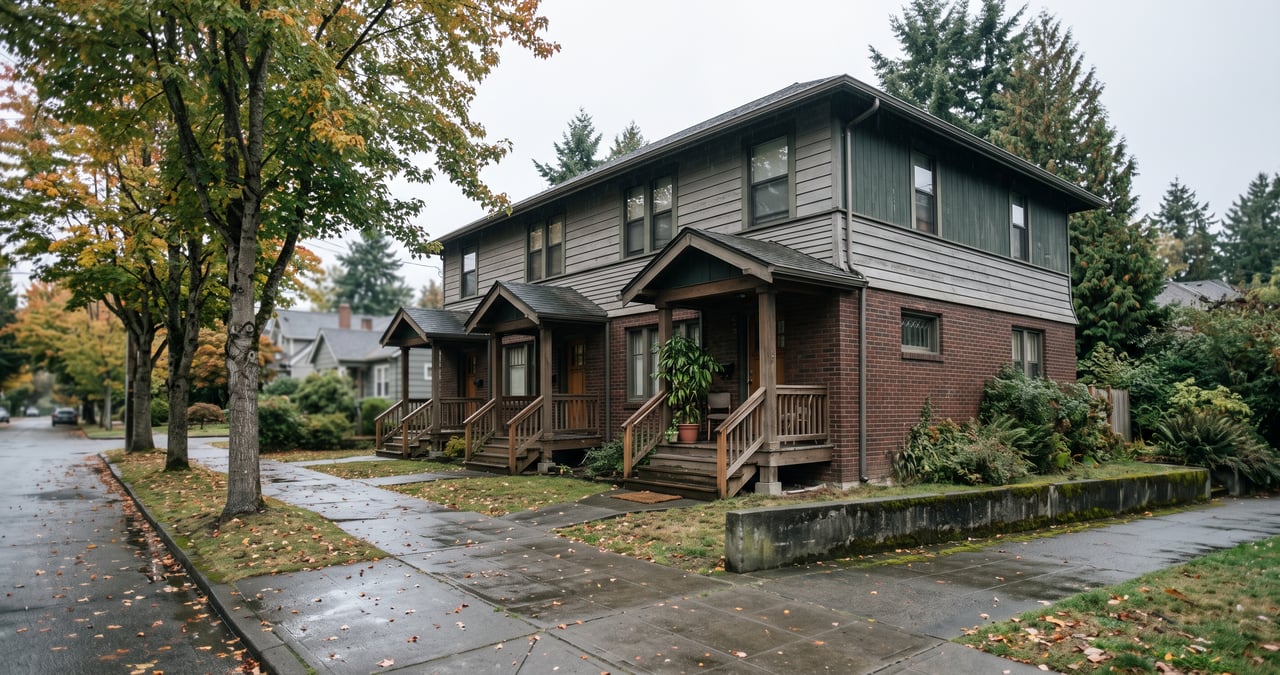
A duplex, triplex, or fourplex where the owner lives in one of the units.
Read that last group again. Living in one unit of a small multifamily building and renting out the rest is the classic house hack. So is renting out a backyard cottage or a couple of bedrooms while you live in the main house. All three setups appear on the exemption list.
There are two catches.
First, the exemption is tied to you living there. Every one of the owner-occupied exemptions is written around the owner occupying the property. Many house hackers plan to move out after a year or two and keep the building as a rental. If that's your plan, ask an attorney how the exemption applies once you've moved out before you count on it. I'd underwrite the property as if the cap applies to you from the day you leave.
Second, claiming an exemption takes paperwork. If you raise rent above the cap because you're exempt, the state requires you to include the facts that support the exemption in your written rent increase notice (RCW 59.18.700). "I live here" isn't something you get to assume your tenant knows. It goes in the notice.
Seattle adds two rules on top
If your rental is inside Seattle city limits, the state cap is only part of the picture.
1. 180 days' notice, not 90
Seattle requires "a minimum of 180 days' advance written notice" for any housing cost increase, and the tenant has to receive it at least 180 days before the increase takes effect (City of Seattle).
Here's what that looks like on the calendar. If a notice reached your tenant today, October 8, 2026:
(Simple day-count math. Add any extra time your method of delivering the notice requires.)
In other words, a Seattle landlord who wanted an increase to start January 1, 2027 needed to get the notice to the tenant by early July 2026. If you're planning increases for 2027, the window for the first half of the year is closing.
2. At 10%, relocation assistance kicks in
Seattle's Economic Displacement Relocation Assistance (EDRA) ordinance applies to "any housing cost increase totaling 10% or more within the same 12 month period" (City of Seattle). Here's how it works, per the City:
When an increase reaches 10% or more, the landlord must attach an EDRA notice to the rent increase notice.
If a tenant household earns 80% or less of Seattle's area median income and moves out after the increase, it can apply for assistance.
The City advances the household three times its current monthly housing cost.
The landlord then has to reimburse the City.
Put the state and city rules side by side and you'll notice something: in Seattle, the most the state allows in 2027 (10%) is also the exact point where EDRA applies. A 10% increase is legal under the state cap, but in Seattle it comes with a relocation-assistance obligation if a qualifying tenant moves out. Keep in mind the City counts the total housing cost increase over 12 months, not just base rent.
One more thing to check: the City's EDRA page doesn't list an exemption for owner-occupied buildings. Don't assume that being exempt from the state cap also exempts you from EDRA. If that question applies to you, the Renting in Seattle helpline is 206-684-5700.
What this means for house hackers
Underwrite rent growth to the cap, not to the market. If you're buying a building where the in-place rents are below market, the cap limits how fast you can close that gap for covered units while the current tenants stay. The upside you see on paper may take years to show up, or only show up when a unit turns over.
Run the numbers twice. Run them once with the owner-occupied exemption and once without it. The exemption may apply while you live there. Your long-term numbers should hold up without it.
Treat the seller's rent roll as a document to verify, not a number to copy. Ask when each tenant's last increase took effect, how much it was, and whether proper notice was given. A tenant or the Attorney General can sue to enforce the rent increase rules (RCW 59.18.700). You want to know about a problem before you own it.
Watch the ownership structure. The owner-occupied exemptions don't apply to properties owned by a corporation, an LLC with a corporate owner, or a REIT. If you're thinking about holding a house hack in an entity, get advice on how that affects the exemption before you close.
Put the Seattle notice clock on your calendar. With 180 days of notice, rent planning in Seattle is a half-year-ahead job. Many small landlords line increases up with lease renewal dates. In Seattle, the notice may need to go out before the tenant has even started thinking about renewing.
What we're seeing locally
The rent cap applies statewide, so Bellevue, Shoreline, Renton, Everett, and Tacoma landlords are working under the same 10% limit as Seattle. Seattle's 180-day notice and EDRA rules are city ordinances. They apply within Seattle city limits. If you own rentals in more than one city, check each city's rules. Don't assume Seattle's rules travel with you, or that other cities don't have their own.
What an experienced Seattle investor should take from this
Here's my read, and I'll be clear it's my interpretation, not a finding from data.
The cap matters more for how you buy than for how you raise rent. Most of the coverage of HB 1217 is about how much a landlord can raise rent next year. For a house hacker, the bigger question comes earlier: what rents are you inheriting, and how fast can they realistically change? That's a purchase question, and the answer belongs in your offer price.
The exemption is real, but don't build your plan on it. It's a meaningful break for owner-occupants of small buildings, and it's one of the few places this law clearly favors the classic house-hack setup. But it depends on you living there. If your plan is to live there a year and then rent the whole building, the version of the property you'll own long term is the one that's covered by the cap.
In Seattle, 10% is a ceiling and a trigger. Under the state law, 10% is the most you can raise rent in 2027. Under city law, 10% is where relocation assistance starts. If you own in Seattle, those two rules together make the decision between a 9% increase and a 10% increase about more than one point of rent.
Paperwork is part of the investment now. Notices, exemption facts, EDRA forms, and dates all matter. None of that is hard, but all of it is easy to get wrong if you're running a house hack on the side of a day job. Building a simple notice calendar for every unit is one of the cheapest risk controls you can put in place.
FAQ
What is Washington's maximum rent increase for 2027? 10%. It applies to rent increases that take effect between January 1 and December 31, 2027. The formula (7% plus Seattle-area inflation) came out to 11.53%, so the 10% ceiling applies (WA Commerce).
What was the limit for 2026? 9.683%, per the Department of Commerce.
Does the cap apply if I live in one unit of my duplex, triplex, or fourplex? The City of Seattle lists duplexes, triplexes, and fourplexes where the owner occupies one unit as exempt from the state limit, as long as the owner isn't a corporation, an LLC with a corporate owner, or a REIT. If you rely on the exemption to raise rent above the cap, you must include the supporting facts in your written notice.
Does the cap apply to my ADU or DADU? The City of Seattle lists single-family properties where the owner rents out no more than two units or bedrooms, including ADUs and DADUs, as exempt when the owner lives there. If you don't live on the property, assume the cap applies.
How much notice do I need to give for a rent increase in Seattle? At least 180 days, received by the tenant before the increase takes effect. The statewide minimum is 90 days (City of Seattle).
What happens in Seattle if I raise rent by 10%? A housing cost increase of 10% or more within 12 months triggers Seattle's Economic Displacement Relocation Assistance rules. You must include an EDRA notice. If an eligible tenant household (80% of area median income or less) moves out, the City advances three months of housing costs and the landlord reimburses the City (City of Seattle).
Can I raise rent to market when a tenant moves out? The state law allows a landlord to set any rent amount after a tenant vacates and the tenancy ends (RCW 59.18.700).
Can I raise rent during a tenant's first year? No. Commerce says a landlord may not increase rent during the first 12 months of a tenancy.
Does this apply to brand-new construction? Properties 12 years old or less, measured from the first certificate of occupancy, are exempt from the cap.
The short version
The 2027 cap is 10%. If you live in the small building or home you rent out, you may be exempt. If you're in Seattle, you still need 180 days' notice, and a 10% increase brings relocation assistance into play.
For house hackers, the most useful thing to do with this information happens before you buy. Look hard at the rents you're inheriting, run your numbers with and without the owner-occupied exemption, and plan as if the cap applies to you once you move out.
If you're weighing a duplex, fourplex, or ADU property and want to run those numbers together, you can grab a time with me here.
About the author
Michael Haas is a Seattle-based real estate agent, investor, and short-term rental host, affiliated with Compass. He runs HouseHack Seattle, where he works with buyers, homeowners, and investors on house hacking, ADUs and DADUs, small multifamily, and property analysis across Seattle and the greater Puget Sound region.
This article describes Washington State and City of Seattle rental rules as of October 8, 2026. It is not legal, tax, or investment advice. Rent increase rules, exemptions, and notice requirements depend on your specific property, ownership, and tenancy. Talk to a qualified attorney before relying on an exemption or issuing a rent increase notice.