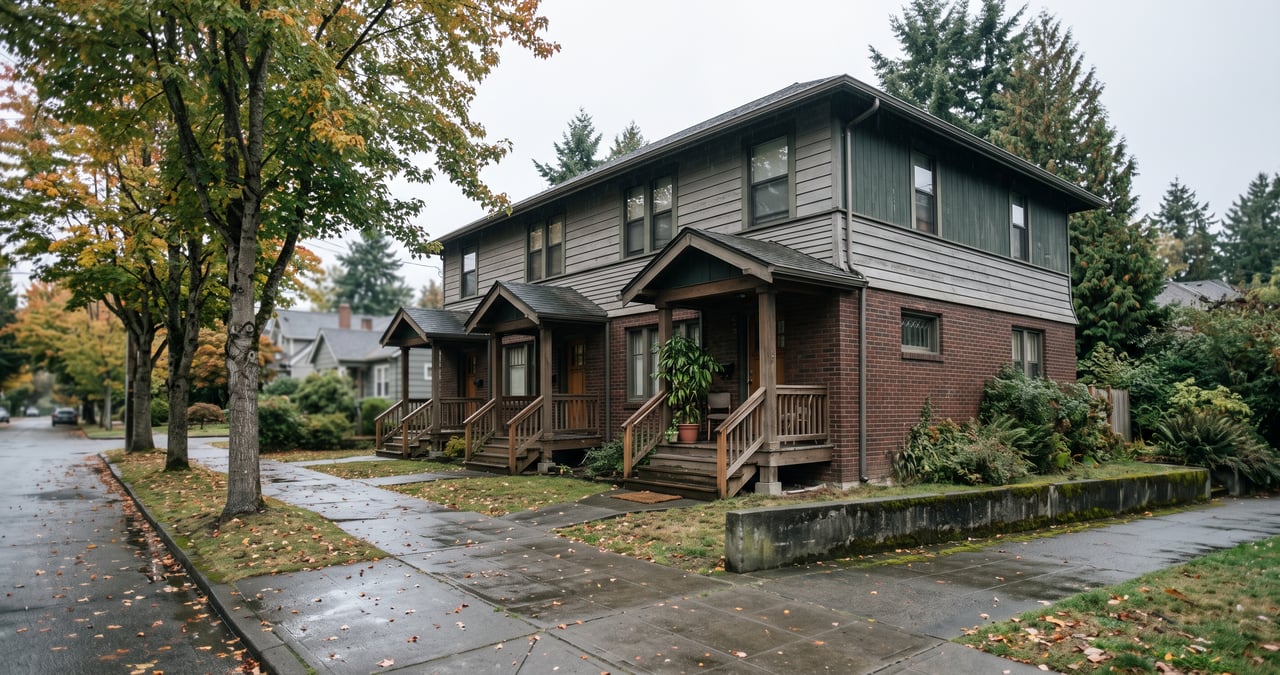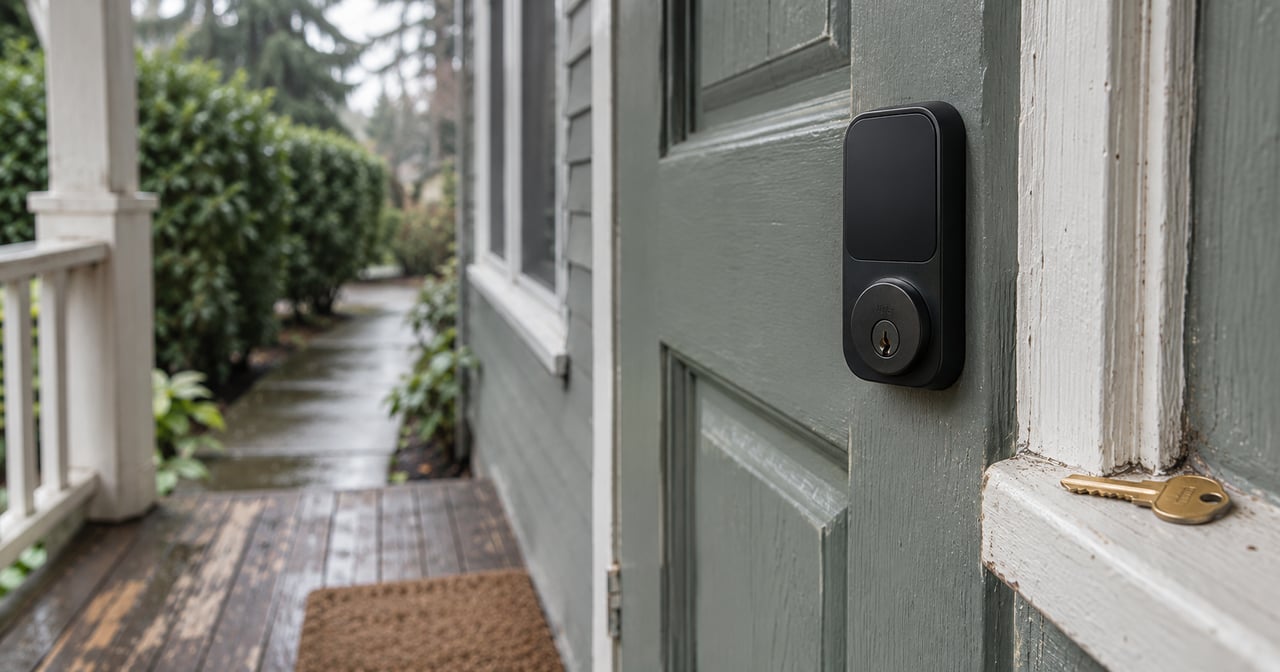
Three unrelated changes take effect in Washington on January 1, 2027. The state’s real estate excise tax brackets shift upward, every lease signed after December 31 has to carry a flood disclosure, and any rental using an app, fob, card, or biometric lock has to offer an alternative key on request plus a written data policy.
The third one is the one most small owners will miss. Unlike the state rent cap, it contains no exemption for owner-occupied buildings - so if you live in one unit of a triplex and put a smart lock on the other two doors, you are inside it.
What do the actual statutes say?
Most of what’s been written about these two laws comes from property-management companies writing for clients with portfolios. The summaries are mostly fine, but a few of them paraphrase the flood rule in a way the enrolled bill doesn’t support. So I read both session laws end to end. Here’s what they say.
The data
Metric | Geography | Timeframe | Finding | Source |
|---|---|---|---|---|
State REET brackets, current | Washington | Effective 1/1/2023 | 1.10% to $525,000; 1.28% to $1,525,000; 2.75% to $3,025,000; 3.0% above | |
State REET brackets, new | Washington | Effective 1/1/2027 | 1.1% to $551,000; 1.28% to $1,551,000; 2.75% to $3,051,000; 3.0% above | |
Smart access rules effective date | Washington | 1/1/2027 | ESSB 5937, Chapter 55, Laws of 2026 | |
Flood disclosure applicability | Washington | Leases entered after 12/31/2026 | SSB 6237, Chapter 234, Laws of 2026 | |
Active listings | NWMLS service area | September 2026 | 24,965, up 24.5% year over year — most since September 2014 | |
Months of inventory | NWMLS service area | September 2026 | 4.44, highest since February 2014 | |
Median sale price | NWMLS service area | September 2026 | $625,000, down 0.9% year over year | |
Median sale price | King County | September 2026 | $850,000, unchanged year over year | |
30-year fixed mortgage rate | National | Week ending 10/29/2026 | 7.24%, after 7.32% on 10/22 and 7.40% on 10/15 |
What changed, and what didn’t
The smart-lock rule is new ground. ESSB 5937 defines a “smart access system” as any system using electronic or computerized technology - an RFID card, a phone app, biometric information, or other digital technology designed to gather information - to grant entry to a building containing a dwelling unit, its common areas, or an individual unit. A lock that relies only on manually typing a code into a keypad is excluded.
If a system like that is in place, three duties follow. On a tenant’s request, you must offer an alternative key that doesn’t use biometrics or a phone app - a fob, a card, a physical key, or a manual keypad. You must provide a plain-language written data policy at lease signing or within five days of installation. And you may collect only the minimum data needed, limited to an enumerated list in the statute.
There’s a practical shortcut built into the law. If your lock vendor already publishes a policy covering the required contents, and you don’t retain or sell data from the system, handing over that policy or a link to it satisfies the written-policy duty.
The flood disclosure is narrower than it sounds. SSB 6237 adds a three-part statement to the landlord duties statute: that the property may be located in a special flood hazard area or an area of potential flooding, that your insurance doesn’t cover the tenant’s belongings and they should consider renter’s and flood insurance, and that hazard information is available from the county government where the property sits.
Read that first clause again. The enrolled version says “may be.” An earlier draft tied it to the owner’s actual knowledge, and that language didn’t survive. As written, this is a generic disclosure that goes in every lease - not a determination you have to research about your specific parcel.
The REET change is arithmetic, not policy. Under RCW 82.45.060, the graduated state brackets adjust every four years. The thresholds move up roughly 5%. The rates themselves don’t change, the flat 1.28% on qualified agricultural and timberland doesn’t change, and the local REET portion is separate and still gets added on top.
What didn’t change: the 2027 rent cap is still 10%, Seattle still requires 180 days’ notice for a housing cost increase, and the state’s 90-day notice minimum is unchanged. Nothing here touches zoning, permitting, or what you can build.
What does this mean for investors?
The exemption you learned about in October does not carry over. Washington’s rent cap exempts certain owner-occupied properties, including duplexes, triplexes, and fourplexes where the owner lives in a unit. I wrote about that in October. Neither of these two new laws contains a comparable exemption in its text. If you concluded six weeks ago that the cap doesn’t reach your building, that conclusion was about the cap only.
The smart-lock rule is a small-owner problem more than a large-owner problem. A professional management company already has a vendor relationship, a privacy policy on file, and a lease addendum process. An owner who bought a $180 lock for the ADU in 2023 has none of that. The gap in readiness runs opposite to the gap in portfolio size.
Your January renewals are already in the window. The flood disclosure attaches to the lease document, for leases entered after December 31. If you’re also planning a rent increase, Seattle’s 180-day notice requirement means the notice and the lease rewrite aren’t on the same clock. Mapping those two dates per unit is a twenty-minute task that’s easy to get wrong in February.
The REET shift is real and small. On a $900,000 sale, the state portion runs about $10,575 under current brackets and about $10,528 under the 2027 brackets - a difference near $47. At $1,550,000 the gap widens to roughly $414. (That’s my arithmetic off DOR’s published tables, state portion only, excluding local REET and fees. Check it against your closing statement.)
I’ll say the obvious thing: that is not a reason to move a closing date. If someone tells you to push a December closing into January for the tax treatment, ask them to show you the number.
One position worth taking. The compliance items here cost almost nothing to handle in November and are annoying to handle in February under a tenant request. That asymmetry is the whole argument for doing this now. It isn’t a strategy, it’s housekeeping.
What are we seeing locally?
The regional backdrop matters for how much slack owners have. NWMLS reported 24,965 active listings in September, up 24.5% from a year earlier and the most since September 2014, with months of inventory at 4.44 - the highest since February 2014. The median sale price was $625,000, down 0.9%, and King County’s median was unchanged at $850,000.
Rates moved against buyers through that stretch. The 30-year fixed average reached 7.40% in mid-October before easing to 7.24% for the week ending October 29, per Freddie Mac’s survey as published by FRED.
What that combination means for a rental owner: turnover is slower and more expensive than it was two years ago, and the cost of a tenant dispute over something procedural is higher when the replacement tenant takes longer to find. That’s the practical case for getting the lease file clean before January rather than after.
For house hackers specifically, the ADU and DADU question is the one I expect to come up most. A backyard cottage with an app-controlled lock sits inside the statutory definition, because the definition turns on a building containing a dwelling unit that uses the system. Size doesn’t enter into it.
FAQ
What changes for Washington property owners on January 1, 2027?
Three things: the state’s graduated real estate excise tax brackets shift upward, every lease entered after December 31, 2026 must include a flood disclosure, and rentals using smart access systems must offer an alternative key on request and provide a written data policy.
Does my keypad lock count as a smart access system?
No, if entry relies solely on manually typing a code into a keypad. The statute’s definition specifically excludes that. A lock that uses a phone app, an RFID card or fob, or biometrics is covered.
Do I have to give every tenant a physical key?
Only tenants who ask. The duty is to offer an alternative on request. The statute lists examples including a key fob, key card, physical key, or manual keypad code.
What has to be in the written data policy?
In plain language: what data the system collects including data about tenants’ guests, how you protect it, how long you keep it, what you do if there’s unauthorized access including notifying users, how data gets destroyed or anonymized, and the process for temporarily adding someone with written consent.
What if my lock manufacturer already has a privacy policy?
The statute allows that. If the developer supplies the required information and you don’t retain or sell data from the system, giving tenants that policy or a link to it satisfies the requirement.
Does the smart access law apply if I live in one of the units?
The act as written doesn’t contain an exemption for owner-occupied buildings, small landlords, or single-family rentals. That’s different from the rent cap, which does have owner-occupied exemptions. Ask an attorney how it applies to your property.
Does the flood disclosure mean I have to find out whether my property floods?
The enrolled statute requires you to state the property may be in a special flood hazard area or area of potential flooding, and to point the tenant to county government for hazard information. It doesn’t direct you to make a determination. Don’t take that as legal advice on how to word your lease.
When does the flood disclosure first apply?
To leases entered into after December 31, 2026. A lease signed in December under the old form isn’t retroactively affected.
What are the new REET rates?
The rates are the same. The thresholds move: 1.1% on the portion up to $551,000, 1.28% above that through $1,551,000, 2.75% through $3,051,000, and 3.0% above. Local REET still gets added separately.
Should I delay a closing until January to save on excise tax?
On a typical Seattle house the state-portion difference is a few dozen dollars. Run the actual number for your sale price before anyone talks you into moving a date.
Does any of this apply to a short-term rental?
Both laws amend the Residential Landlord-Tenant Act, which generally governs tenancies rather than transient stays. I’m not going to guess at the edge here - if you run an Airbnb with a smart lock, that’s an attorney question.
Does this change the rent cap or Seattle’s notice rules?
No. The 2027 cap is still 10%, Seattle still requires 180 days’ notice for a housing cost increase, and the statewide minimum is still 90 days.
Where this leaves you
Three changes, one date, and about sixty days to deal with them. None is dramatic. The one worth your attention is the smart-lock rule, because it reaches small owner-occupied buildings that the rent cap deliberately left alone, and because most people in that group don’t think of a lock as a compliance item.
The honest summary: spend an hour in November inventorying your locks and updating your lease template, and don’t reschedule anything over the excise tax.
If you’re working through a duplex, fourplex, or ADU property and want to talk about where this lands in your numbers, grab a time with me here.
About the author
Michael Haas is a Seattle-based real estate agent, investor, and short-term rental host, affiliated with Compass. He owns and operates rental property in Washington and works with buyers, homeowners, and investors on house hacking, ADUs and DADUs, small multifamily, and property analysis across Seattle and the greater Puget Sound region. He writes HouseHack Seattle, where the focus is on what the underlying documents and data actually say rather than what the headlines say about them. The statutory descriptions in this post come from the enrolled session laws read in full, not from secondary coverage.
This article describes Washington State law and City of Seattle rules as of November 2, 2026. It is not legal, tax, lending, or investment advice. How these statutes apply to a specific property, lease, or transaction depends on facts this article doesn’t know. Talk to a qualified attorney before relying on any of it, and to your CPA or escrow officer on the excise tax.