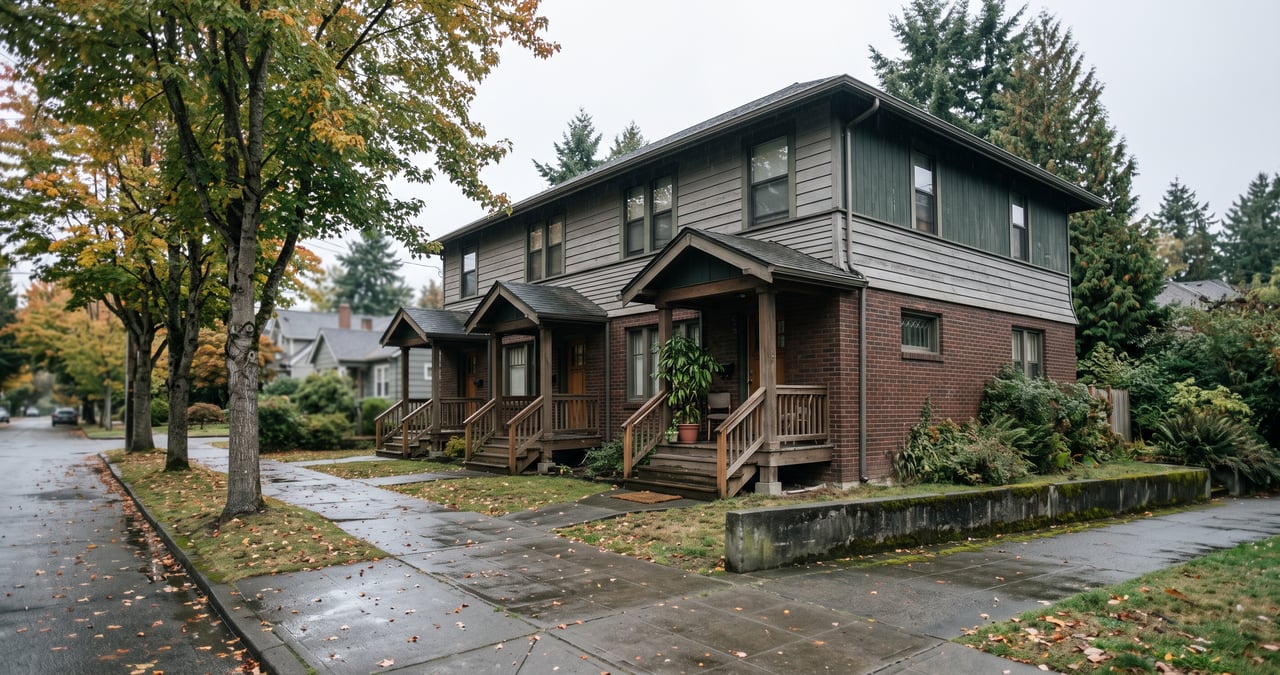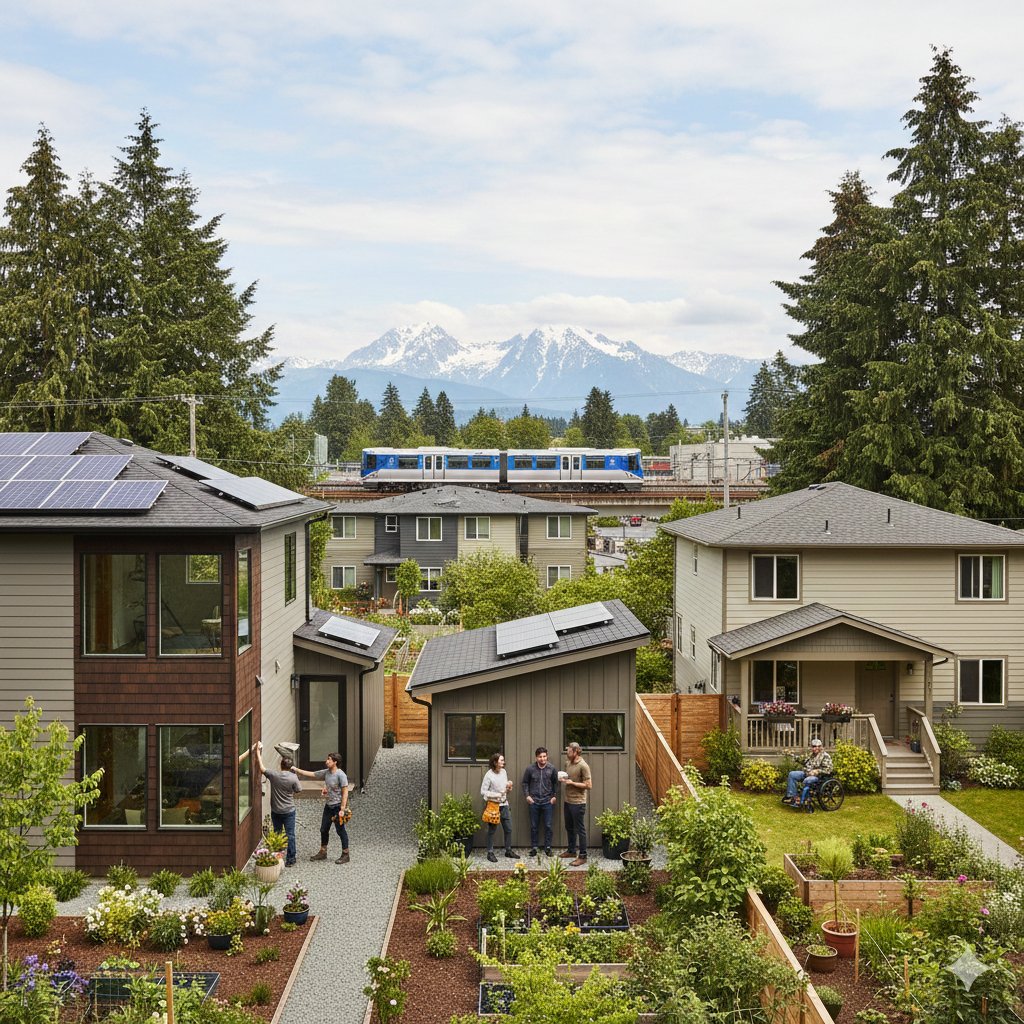
The Seattle housing market is famous for its high home prices, tech‑driven job growth and persistent affordability issues. For owner‑occupants and small investors, house hacking -living in a property while renting out other units or rooms is a way to offset mortgage costs and build equity over time. As we head into 2026, state and local policies continue to evolve. Washington’s missing‑middle laws, Seattle’s rental registration and just‑cause ordinances, federal financing guidelines and IRS rules all shape how, and whether, an owner can successfully house hack. This guide breaks down verified strategies, real constraints and planning tips for anyone considering house hacking in Seattle.
Understanding House Hacking
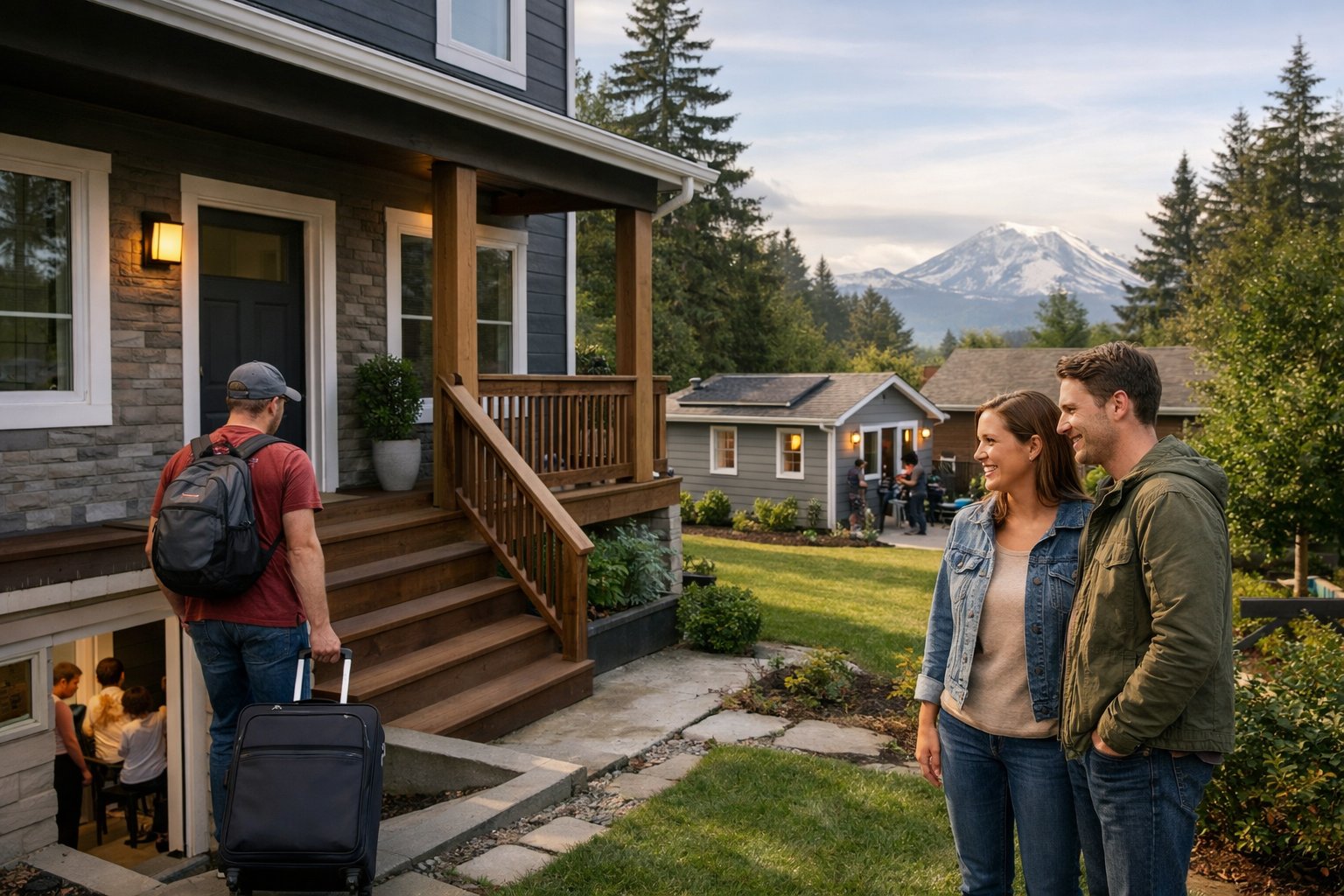
House hacking involves occupying part of a property a single‑family home, duplex, triplex or small multifamily building while renting out other portions. Approaches include:
-
Renting spare bedrooms or a finished basement. This is often the simplest strategy for first‑time home buyers.
-
Purchasing a duplex, triplex or four‑plex and living in one unit while renting the others. The rental income can help with mortgage qualification and payments.
-
Building or converting an accessory dwelling unit (ADU), either attached (AADU) or detached (DADU). ADUs provide private living spaces for renters without sharing walls with the owner.
-
Creating a co‑living arrangement where several unrelated adults share a larger home. Written house rules and clear agreements help maintain harmony.
These approaches work because the owner occupies part of the property, which can unlock owner‑occupied financing, lower down‑payment options and better mortgage rates compared to investment properties. However, homeowners must follow local zoning rules, landlord–tenant laws and federal lending regulations.
Seattle Housing Context
Seattle’s housing costs set the stage for house hacking. According to U.S. Census Bureau QuickFacts for 2019‑2023, median gross rent in Seattle was $1,998 per month, while median monthly owner costs for homes with a mortgage were $3,398 Source. Approximately 44.2 % of housing units were owner‑occupied, and the median home value was $912,100 Source. These figures illustrate why many buyers look for creative ways to offset high payments.
Seattle’s Evolving Zoning and ADU Rules

State Law (HB 1337) and Accessory Dwelling Units
Washington’s House Bill 1337 (effective mid‑2023) overhauled local ADU rules. The state guidance requires cities inside urban growth areas to allow two ADUs per residential lot, prohibits owner‑occupancy requirements for the main house or ADU, and mandates that minimum impact fees be capped at 50 % of the principal unit’s fees Source. The guidance clarifies that local governments must allow ADUs of at least 1,000 square feet and prohibits street‑improvement or aesthetic requirements beyond those applied to the principal unit Source. It also specifies that within urban growth areas, cities may not require the owner to live in either the main residence or the ADU, though municipalities can still require occupancy for short‑term rentals Source.
Seattle’s Department of Construction & Inspections (SDCI) aligns with state law. Its ADU page notes that owners are not required to live on a property with an ADU and that two ADUs are allowed one attached and one detached. Maximum size is 1,000 sq ft for attached ADUs and 1,000 sq ft for detached ADUs, not including up to 250 sq ft of parking Source. Parking is generally not required unless the property lacks close transit access Source These rules make ADUs a key house‑hacking tool because they can be built or converted without forcing the owner to move.
Seattle’s Missing‑Middle Legislation (HB 1110)
In 2023 the Washington Legislature passed House Bill 1110, often called the “middle housing” bill. It requires cities to allow at least four dwellings on each residential lot and up to six units within ¼ mile of major transit or when at least two units are affordable Source Seattle adopted interim legislation to meet this requirement by the June 30 2025 state deadline Source The interim ordinance states that residential areas must permit at least four units per lot and six units near transit or when two units are affordable Source. The ordinance took effect by June 30 2025 Source.
The permanent legislation (Council Bill 120993) was approved in December 2025 alongside the City’s updated Comprehensive Plan. The official summary explains that at least four units are allowed on all lots regardless of size, with six units allowed within a ¼‑mile walk of frequent transit or if two units are affordable Source. The legislation notes that ADUs count toward these unit limits and sets detailed floor‑area ratios, lot coverage and setback requirements Source. This means a property could host a duplex plus two ADUs (four units total) or a triplex and three ADUs (six units) near transit. The ordinance emphasises clear, objective design standards and aims to increase housing choices across neighborhood residential zones.
Implications for House Hackers
These zoning changes expand opportunities for house hackers. Building two ADUs or constructing additional units on a lot can create multiple income streams. However, the complexity of Seattle’s code requires careful planning. Key takeaways:
-
ADUs are legal and owner occupancy isn’t required; you can live offsite and still rent them long‑term, but short‑term rentals may require owner occupancy and a separate license Source.
-
Unit counts matter. In neighborhood residential zones, ADUs count toward the total units allowed (four or six), so a duplex plus two ADUs uses up the four‑unit allowance Source.
-
Building standards such as floor‑area ratio, lot coverage, setbacks and parking vary. For example, standard ADUs are limited to 1,000 sq ft Source while stacked flats within ¼ mile of transit can have higher density (1 unit per 650 sq ft) Source
-
The city’s permanent plan will be implemented in phases through 2026 and may introduce further changes. Always consult SDCI or a land‑use professional before investing.
Landlord Responsibilities & Tenant Protections in Seattle

Becoming a house hacker also means becoming a landlord. Seattle’s renter‑protection laws are among the nation’s strongest. Failure to comply can lead to fines or legal disputes.
Rental Registration & Inspection (RRIO)
Seattle’s Rental Registration & Inspection Ordinance (RRIO) requires landlords to register most rental housing units and renew registration every two years Source Registration costs around $70-$175 per unit depending on the number of units. Properties are inspected at least once every 5-10 years to verify compliance with housing and safety standards Source. Exemptions exist for owner‑occupied properties with two or fewer units and for certain state‑licensed facilities, but most house hackers with multiple rentals must register.
Just Cause Eviction Ordinance
Seattle’s Just Cause Eviction Ordinance limits when landlords can terminate a lease or refuse to renew. Owners must have one of 16 specified reasons such as non‑payment of rent, violation of a comply‑or‑vacate notice, sale of a single‑family home, or owner move‑in and must give proper written notice. For example, if the owner intends to move into a single‑family home or ADU, 90‑day advance notice is required Source Extra protections apply during the school year and the winter eviction moratorium Source House hackers should avoid relying on short, fixed‑term leases solely to evict tenants; Seattle courts treat any non‑justified termination as illegal.
Security Deposits and Move‑In Condition
Seattle requires a written rental agreement with a detailed move‑in checklist documenting the condition of the unit. Landlords may deduct from the deposit only for actual damages or unpaid rent, not for normal wear and tear. They must return any unused deposit and an itemized statement of deductions within 30 days of move‑out Source If there is no signed checklist, the landlord must refund the entire deposit Source.
Short‑Term Rentals
Short‑term rentals (stays 29 nights or fewer) are regulated separately. Operators must obtain a short‑term rental operator license and business license. Most hosts are limited to two dwelling units as short‑term rentals, and license numbers must be posted in listings Source These rules apply whether you rent a single room, an ADU, or an entire home via platforms like Airbnb.
Fair Housing Obligations
Federal fair housing law prohibits discrimination based on race or color, religion, sex, national origin, familial status or disability Source. Seattle adds protections for military/veteran status, sexual orientation and gender identity. Landlords cannot advertise “no children” or refuse to rent to a family because of kids. Tenant screening criteria must be applied consistently to all applicants. Because Seattle has “first‑in‑time” requirements and other tenant screening rules, consult local guidelines before selecting tenants.
4 Financing and Mortgage Considerations

House hacking often hinges on financing. Lenders differentiate between owner‑occupied primary residences, second homes and investment properties. Some programs allow the borrower to use projected rental income to help qualify, but they impose occupancy requirements and, for multi‑unit properties, self‑sufficiency tests.
Occupancy Requirements
-
FHA loans: HUD’s Single‑Family Housing Policy Handbook (4000.1) requires that at least one borrower must occupy the property as their principal residence within 60 days of closing and continue living there for at least one year Source Non‑occupying co‑borrowers are allowed but must have a principal residence in the U.S. Exceptions exist for active‑duty military.
-
Fannie Mae and Freddie Mac: Conventional loans classify a property as a principal residence if at least one borrower occupies it. Borrowers can be co‑owners, but only one must reside in the property Source. Second homes must be used by the borrower and cannot be rented out; investment properties are not owner‑occupied.
-
VA loans (for eligible veterans) likewise require the borrower to occupy the property as their primary residence. VA loans allow financing up to four units as long as the veteran lives in one. Always verify occupancy rules with the lender.
Using Rental Income to Qualify
Lenders typically allow a portion of projected rental income to offset the mortgage payment on multi‑unit properties. For FHA loans, the self‑sufficiency test applies to 3‑ and 4‑unit properties; the projected rents must cover the mortgage payment, and the borrower must have at least three months of reserves after closing Source. FHA rules previously did not allow ADU rent to count as effective income, but a 2023 mortgagee letter changed that. HUD now recognizes that ADU rental income can contribute to mortgage payments; the updated underwriting guidelines permit lenders to include income from an ADU when qualifying a borrower for an FHA‑insured mortgage Source The lender must document fair‑market rent via appraisal and, if available, prospective leases Source
Financing Tips
-
Get pre‑approved early and discuss your house‑hacking plans with a loan officer. Lenders may underwrite differently when you intend to rent bedrooms versus entire units.
-
Document rental income. For properties with no rental history, lenders typically use 75 % of the fair‑market rent estimated by an appraiser Source Keep copies of leases and evidence of receipt when you have existing rentals.
-
Budget for reserves. Multi‑unit or ADU properties often require cash reserves sometimes three or six months of mortgage payments especially on FHA and VA loans.
-
Plan for self‑sufficiency. For 3‑ and 4‑unit properties, the projected rents must cover mortgage, taxes and insurance costs Source.
-
Consider renovation loans. FHA’s 203(k) program and Fannie Mae’s HomeStyle loan allow financing rehabilitation costs, including construction of an ADU. HUD’s 2023 mortgagee letter updates the 203(k) program to explicitly support ADUs Source.
5 Tax Considerations

IRS Rules for Renting Your Residence
The IRS treats a home that you both live in and rent out as a personal residence if you use it personally for the greater of 14 days or 10 % of the days it is rented during the year Source When the home qualifies as a residence, rental expenses must be allocated between personal and rental use. You may deduct the portion of mortgage interest, property taxes, insurance and maintenance attributable to the rental use on Schedule E of Form 1040. If you rent the home for fewer than 15 days in a year, you do not report the rental income or deduct any expenses Source
IRS Publication 527 provides additional guidance. Rental income generally is reported on Schedule E; you must divide expenses between rental and personal use and cannot deduct expenses in excess of your share of rental income unless you meet at‑risk and passive activity loss tests Source If you provide significant services (e.g., maid service) resembling a hotel, the income is reported on Schedule C and may be subject to self‑employment tax Source.
Local Property Taxes
Property taxes fund schools, transportation and public services. In King County, real property taxes are due twice a year—the first half must be paid by April 30 and the second half by October 31 Source. Late payments accrue interest and penalties. You may be eligible for tax deferral or exemption if you are a senior, disabled or meet income limits. Even when house hacking, you remain responsible for the full property tax bill; factor these costs into your budget.
6 Planning and Risk Management

House hacking can create long‑term wealth but comes with responsibilities. Before diving in, consider the following:
-
Research zoning and building permits. While the state now allows four to six units on most lots, Seattle’s development standards are complex. Engage with SDCI early and confirm whether you need permits for renovations, ADUs or conversions.
-
Financial modelling. Compare purchase price, renovation costs, loan terms, rents and reserves. Use conservative assumptions; don’t count on future appreciation to bail you out.
-
Maintenance and capital expenses. Set aside money for repairs, replacements and vacancies. Landlords must provide safe housing with functioning plumbing, heating and egress.
-
Insurance. Standard homeowners insurance may not cover rental activities. Ask your insurer about landlord or dwelling policies, and consider umbrella liability coverage.
-
Tenant screening. Follow fair housing rules; use consistent criteria such as income, credit score and rental references. Seattle requires a Fair Chance Housing ordinance that limits the use of criminal history—consult the city for details.
-
Written agreements. Whether you’re renting a room or a full unit, always use a written lease that complies with Seattle laws. For roommates, a cohabitation agreement can clarify expectations around shared spaces and bills.
-
Exit strategy. Ask yourself whether you will sell, convert to fully renter‑occupied, or move into a different property in five or ten years. Different financing options and tax rules apply when you convert your primary residence to a rental.
7 Proven House‑Hacking Scenarios in Seattle

To illustrate how these strategies work in practice, here are some example scenarios. These are not guarantees but examples based on current rules.
Basement Suite in a Single‑Family Home
A young couple buys a three‑bedroom home in Rainier Valley for $800,000. They finish the daylight basement into a legal AADU (approx. 700 sq ft) with its own entrance. By renting the suite long‑term for $1,600/month roughly the median rent for a one‑bedroom in Seattle the couple offsets a significant portion of their $3,800 monthly mortgage. Seattle’s ADU rules do not require them to live on the property, but because they occupy the main house, they qualify for owner‑occupied financing. The ADU counts toward unit limits, so they could potentially add a detached cottage to reach two ADUs Source.
Duplex with Two ADUs
An investor purchases a 4,800 sq ft lot near a light‑rail station zoned “neighborhood residential.” Under HB 1110 compliance rules, the property can host up to six units within a quarter‑mile of frequent transit Source. She builds a new duplex and two detached cottages (DADUs) behind it. The duplex units each rent for $2,100/month, and the cottages rent for $1,700 each. She lives in one duplex unit to satisfy FHA’s one‑year occupancy requirement Source. Because ADUs count toward density, she cannot exceed four total units unless she provides at least two affordable units or qualifies under the six‑unit transit bonus Source.
Triplex with Roommates (Co‑Living)
A group of three friends purchase a triplex in West Seattle for $1 million using a conventional loan. Only one borrower needs to occupy the property Source, so they decide one friend will live in one unit while the others rent their rooms elsewhere. They convert the largest unit into four bedrooms and rent out three rooms to tenants who sign individual leases. The property is registered under RRIO and inspected. Income from the rented units covers most of the mortgage, and because the property has fewer than four units, it’s exempt from certain commercial building codes but still subject to fire and safety standards.
Veteran Uses VA Loan for Four‑Plex
An eligible veteran uses a VA loan to purchase a four‑plex in Beacon Hill. He occupies one unit, rents the other three and qualifies for 100 % financing with no mortgage insurance. Because the property is more than two units, his lender applies a self‑sufficiency test similar to FHA requirements. He documents projected rents through an appraisal and has six months of reserves. Seattle’s just‑cause ordinance still governs tenant relations; to move into another unit later, he must provide at least 90 days’ notice Source.

House hacking is not a get‑rich‑quick scheme but a disciplined strategy that can help Seattle residents build equity and offset high housing costs. Washington’s new middle‑housing laws and Seattle’s adoption of four‑ and six‑unit allowances make it easier than ever to create multiple dwellings on a single lot. Simultaneously, the city’s landlord‑tenant regulations and federal lending rules demand diligence. Successful house hackers plan for maintenance and vacancies, follow zoning and licensing rules, comply with fair housing laws, and consult professionals for legal and tax advice. With careful planning, house hacking can be a smart path to long‑term wealth in Seattle’s ever‑changing real‑estate landscape.
Stay connected with insights on house hacking, local market trends and smart investing strategies. Our community of 1,000+ investors meets regularly to share practical guidance on ADUs, development, BRRRR, rentals (short‑ and long‑term), property management and more, whether you’re a first‑time buyer or a seasoned investor with multiple projects.
Follow us on social for updates, tips and event details:
Instagram: @househackseattle
Facebook: HouseHack Seattle
Youtube: @HouseHack Seattle